Building Sustainable Agriculture, Rural Livelihoods and Community-Led Climate Solutions in Aravalli, Gujarat.
The Aravalli region is witnessing an inspiring example of how local communities, women’s participation and appropriate technology can come together to create practical solutions for sustainable agriculture, rural livelihoods and environmental resilience.
The project, “Reviving Aravalli: Empowering Tribal Women through Biochar Innovations for Sustainable Horticulture and Livelihoods,” is being implemented by Sajeevan Life Pvt. Ltd. in collaboration with WHEELS Global Foundation and ISAP India Foundation. The initiative focuses on communities in Vaghpur, Shamlaji, Lusadiya, Venpur and nearby villages, with an emphasis on biochar, sustainable agriculture, capacity building and livelihood development.
WHEELS Global Foundation (WGF) is a technology-enabled philanthropy and social-impact organization that originated from the global IIT alumni ecosystem. It was created to leverage the knowledge, technology, expertise, networks and resources of IIT alumni and their broader ecosystem to address challenges affecting rural and underserved communities.
ISAP’s approach is centered on the belief that when farmers have better access to technology, markets, knowledge and enterprise opportunities, rural communities can build more sustainable and prosperous livelihoods. Its mission focuses on enhancing the incomes of smallholder farmers by enabling access to markets and technologies.
Sajeevan Life Pvt. Ltd. is an India-based agri-innovation and sustainability enterprise headquartered in Rajkot, Gujarat, working at the intersection of regenerative agriculture, biochar, carbon farming, agroforestry, clean energy, organic certification and sustainable rural livelihoods. The company was incorporated in 2023.
Our Vision
Sajeevan Life’s vision is to build a sustainable future for farmers, communities and the environment by combining nature-based solutions with farmer-centric innovation. Its approach connects environmental restoration with improved agricultural productivity, farmer income and climate action.
Turning Local Biomass into a Resource
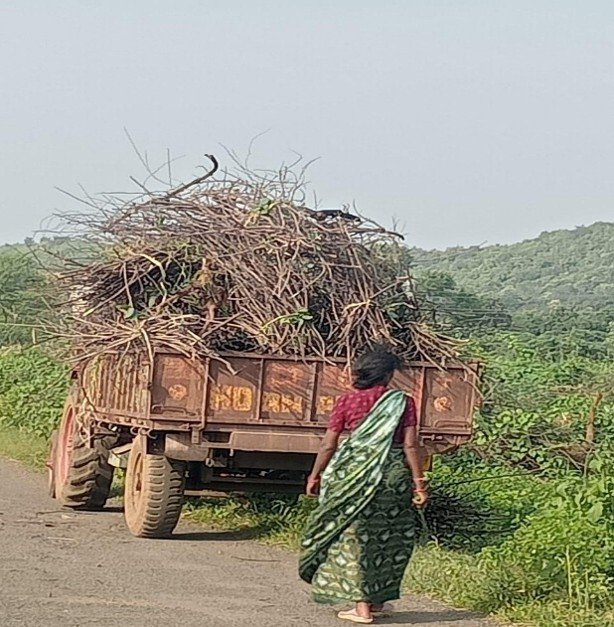
At the heart of the initiative is biochar—a valuable resource produced from locally available biomass.
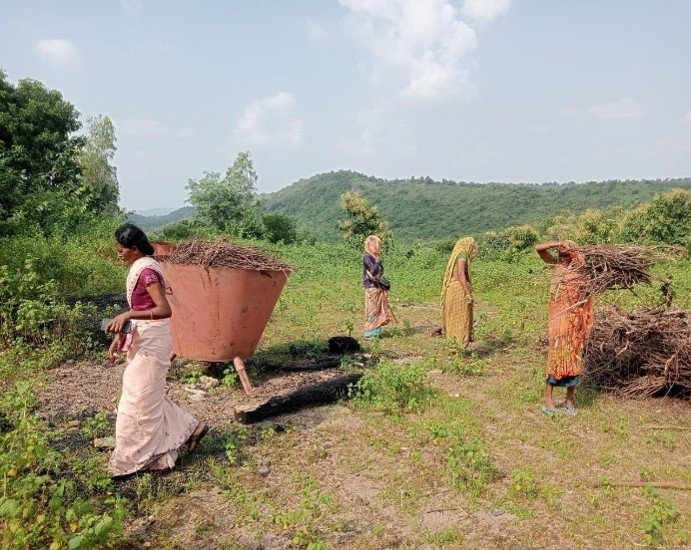
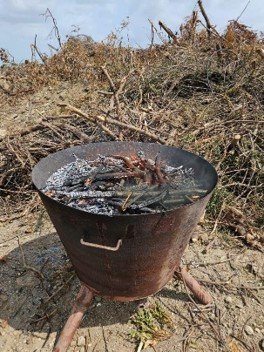
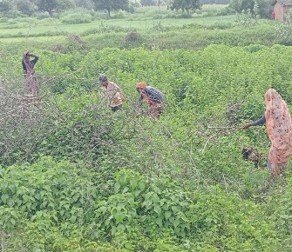
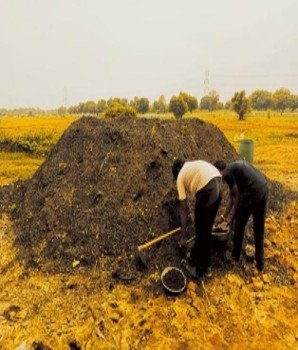
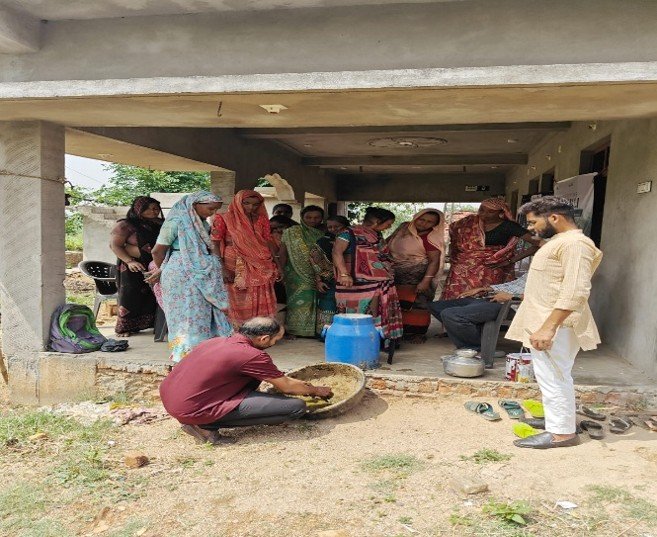
Through the use of Kon-Tiki units, community members are being trained to convert biomass into biochar for use in sustainable agricultural practices and bio-manure preparation. This approach creates an opportunity to transform locally available resources into useful agricultural inputs while strengthening community-level skills and participation.
The project began in May 2025, with the initial production of biochar using Kon-Tiki units. The training programmes were conducted in various villages of Shamlaji, covering biochar production, clean cookstoves and Amrut Jal. Participants were subsequently introduced to biochar activation and FYM enrichment, using locally relevant agricultural inputs.
Women at the Heart of the Initiative
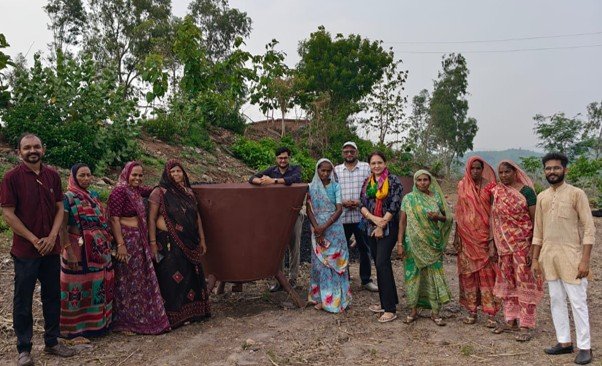
A central focus of the project is to create opportunities for tribal women to participate meaningfully in sustainable agriculture, skill development and rural enterprises.
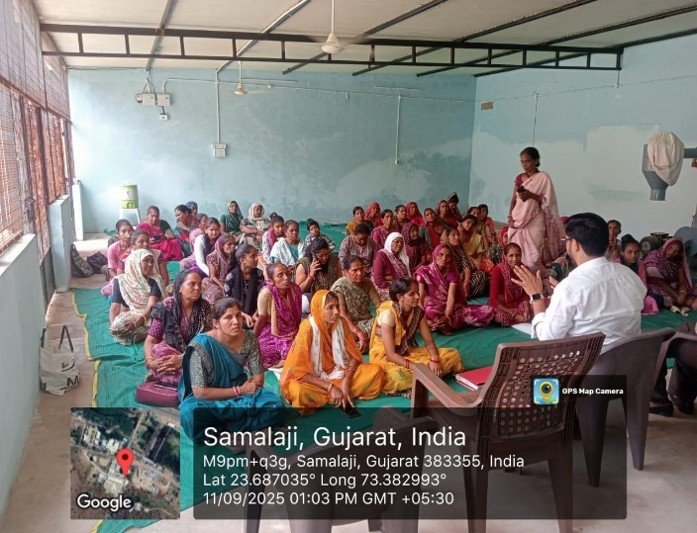
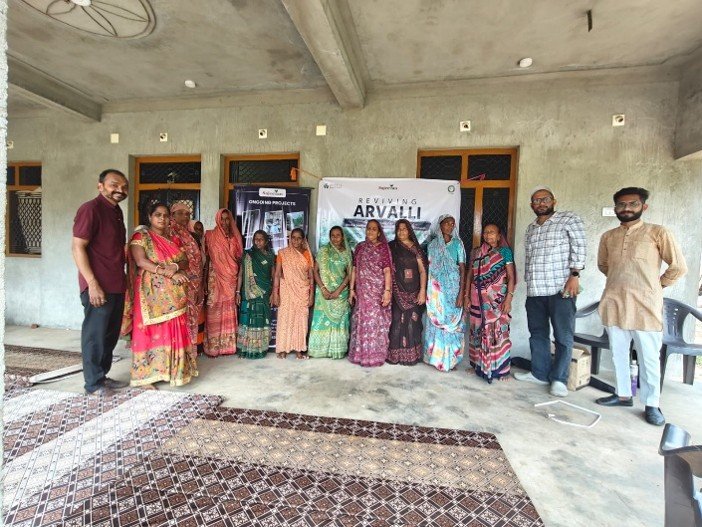
Regular field visits, community meetings and training programmes were conducted across Vaghpur, Venpur and Lusadiya. These activities focused on biochar production, organic agricultural inputs, entrepreneurship and improving the quality and application of biochar.
Women from the participating communities were identified and mobilized for further capacity-building, helping establish a foundation for women-led livelihood opportunities and greater community ownership.
From Biochar to Bio-Manure and Value Addition
The initiative is moving beyond biochar production toward value addition and the development of sustainable agricultural inputs.
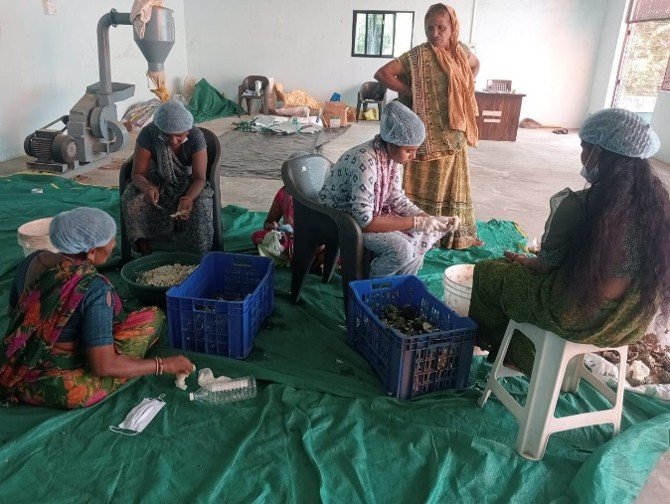
Training activities have focused on biochar activation and its use in organic agricultural practices. The project also explored opportunities for rural value addition through an aseptic pulping machine trial for custard apple, along with activities related to forest fruit collection, grading and sorting.
Biomass surveys were also undertaken to understand the availability of locally accessible resources.
Together, these activities point toward the potential for an integrated rural enterprise model, where locally available biomass, agricultural resources and community skills can be transformed into products that generate both environmental and economic value.
Building Partnerships for Sustainable Rural Development
The collaboration between WHEELS Global Foundation, ISAP India Foundation and Sajeevan Life Pvt. Ltd. brings together community engagement, technical capacity building and field-level implementation.
The partnership is focused on developing practical and replicable approaches that connect biochar, sustainable agriculture, women’s livelihoods, local entrepreneurship and community participation.
Through continued training and field engagement, communities are developing the knowledge and skills needed to produce, activate and utilize biochar and organic agricultural inputs locally.
Key Achievements
Between May and November 2025, the initiative achieved several important milestones:
-
- 20+ tribal women trained in biochar, organic inputs and livelihood-related activities.
-
- Regular training conducted on biochar activation and organic farming practices.
-
- Community members engaged in biochar production using Kon-Tiki units.
-
- Market linkages developed, including the sale of fresh Jamun to Ahmedabad.
-
- Training conducted on bio-manure preparation and value addition.
-
- Activities initiated around custard apple pulping, fruit collection, grading, sorting and Pulping.
-
- Biomass availability assessed through field-level surveys.
-
- Community participation strengthened through FPC and farmer workshops.
Creating a Replicable Community-Led Model
The experience from the Aravalli region demonstrates the potential of combining appropriate technology with local knowledge and community participation.
The project is not limited to biochar production. It seeks to build a broader ecosystem of skills, livelihoods, agricultural applications, market connections and community ownership.
By placing tribal women and local communities at the centre of implementation, the initiative is creating a model that can potentially be adapted to other rural and tribal regions where agricultural residues and biomass are available but livelihood opportunities remain limited.
Looking Ahead
Sajeevan Life Pvt. Ltd., together with its partners, aims to continue strengthening the Aravalli model through expanded technical training, biochar-based agricultural applications, livelihood development and stronger market linkages.
The longer-term vision is to build community-led enterprises that connect environmental sustainability with rural economic opportunities, while encouraging better utilization of locally available resources.
A Vision for a Resilient Aravalli
The story emerging from the Aravalli is ultimately about more than biochar.
It is about people, skills, resources and opportunity.
When local biomass can be transformed into useful agricultural inputs, when tribal women gain new skills and livelihood opportunities, and when communities take ownership of sustainable practices, environmental action becomes closely connected with rural development.
The vision is simple: transform local resources into local opportunities—improving agricultural practices, strengthening livelihoods and building more resilient rural communities.